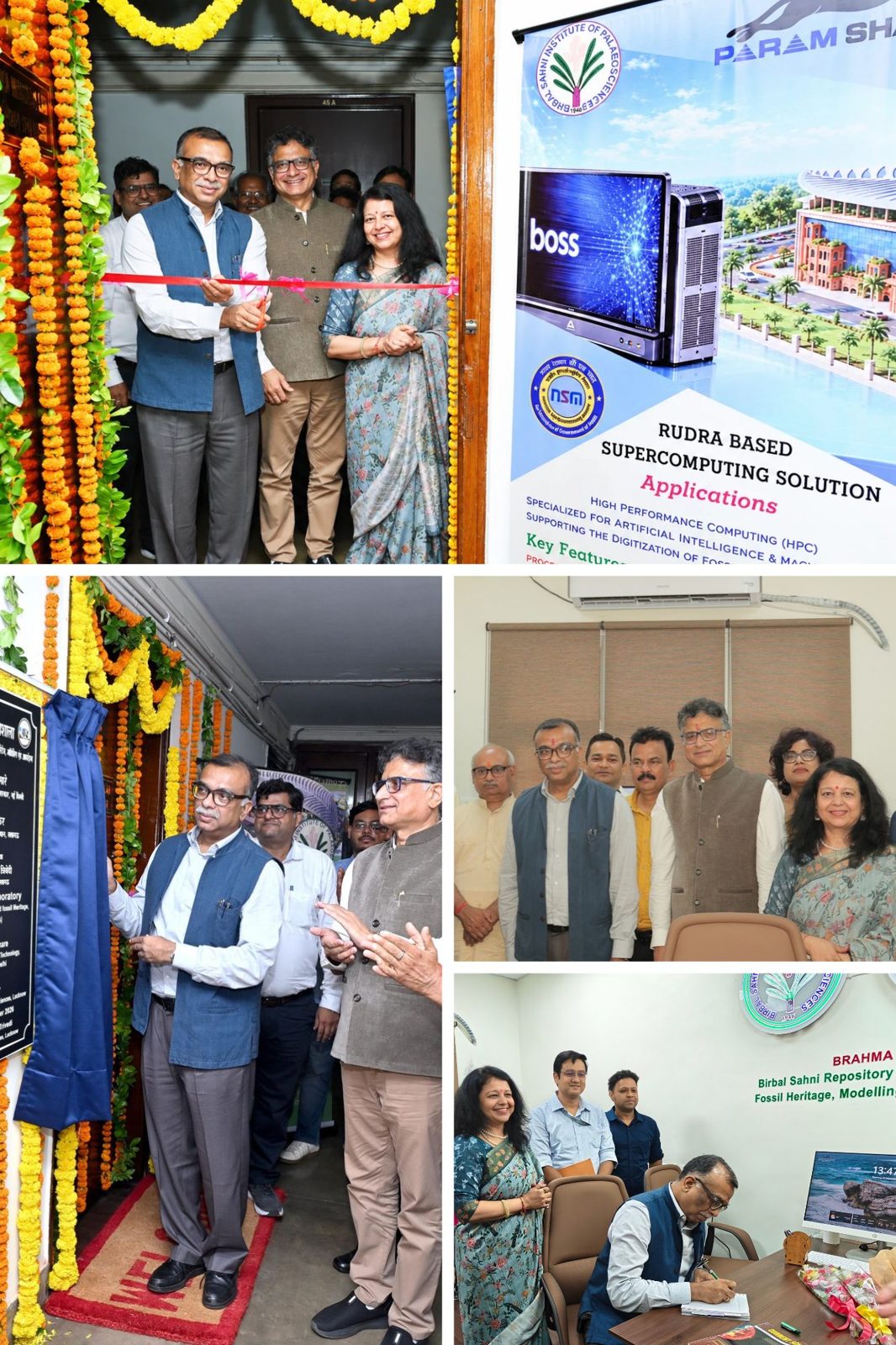
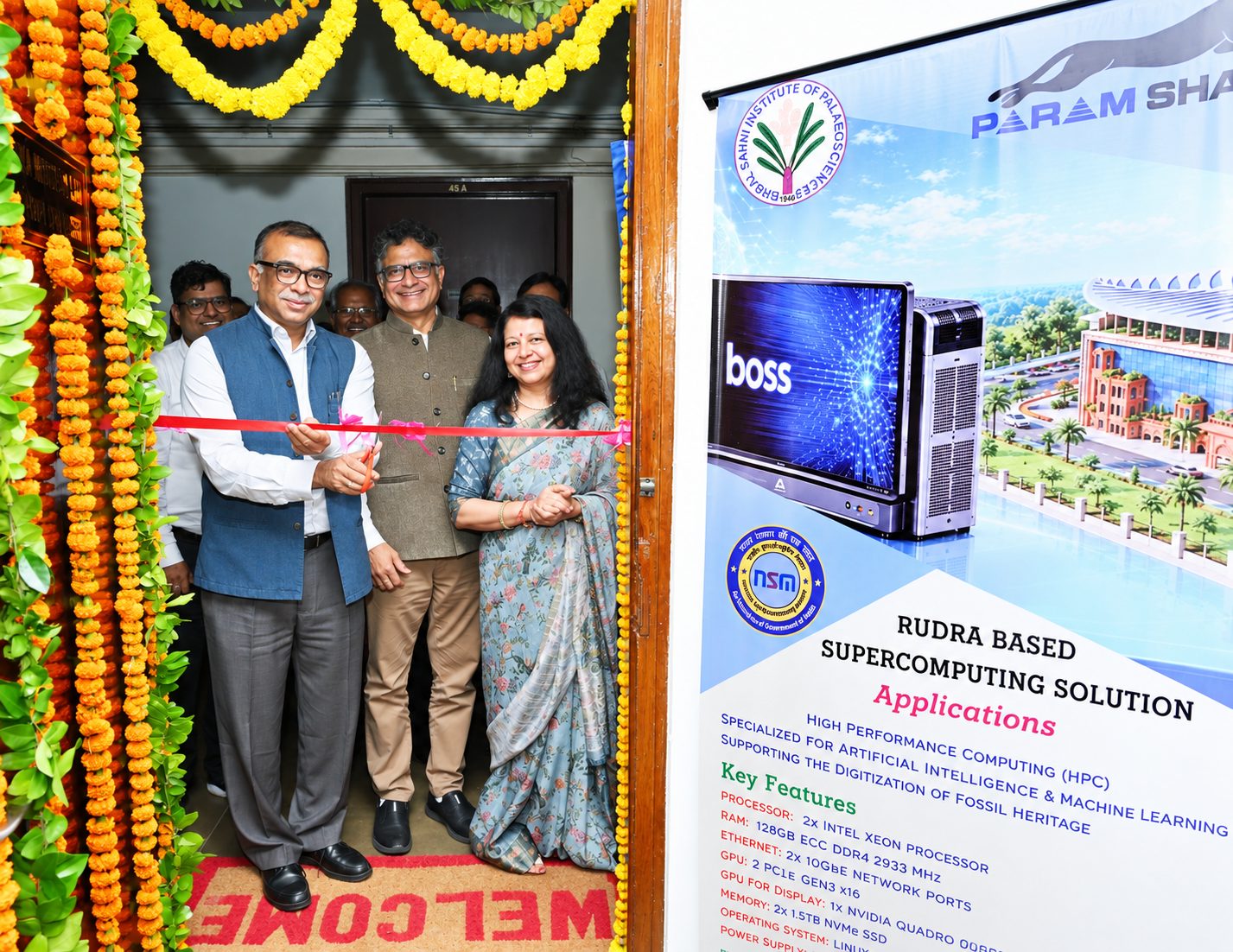
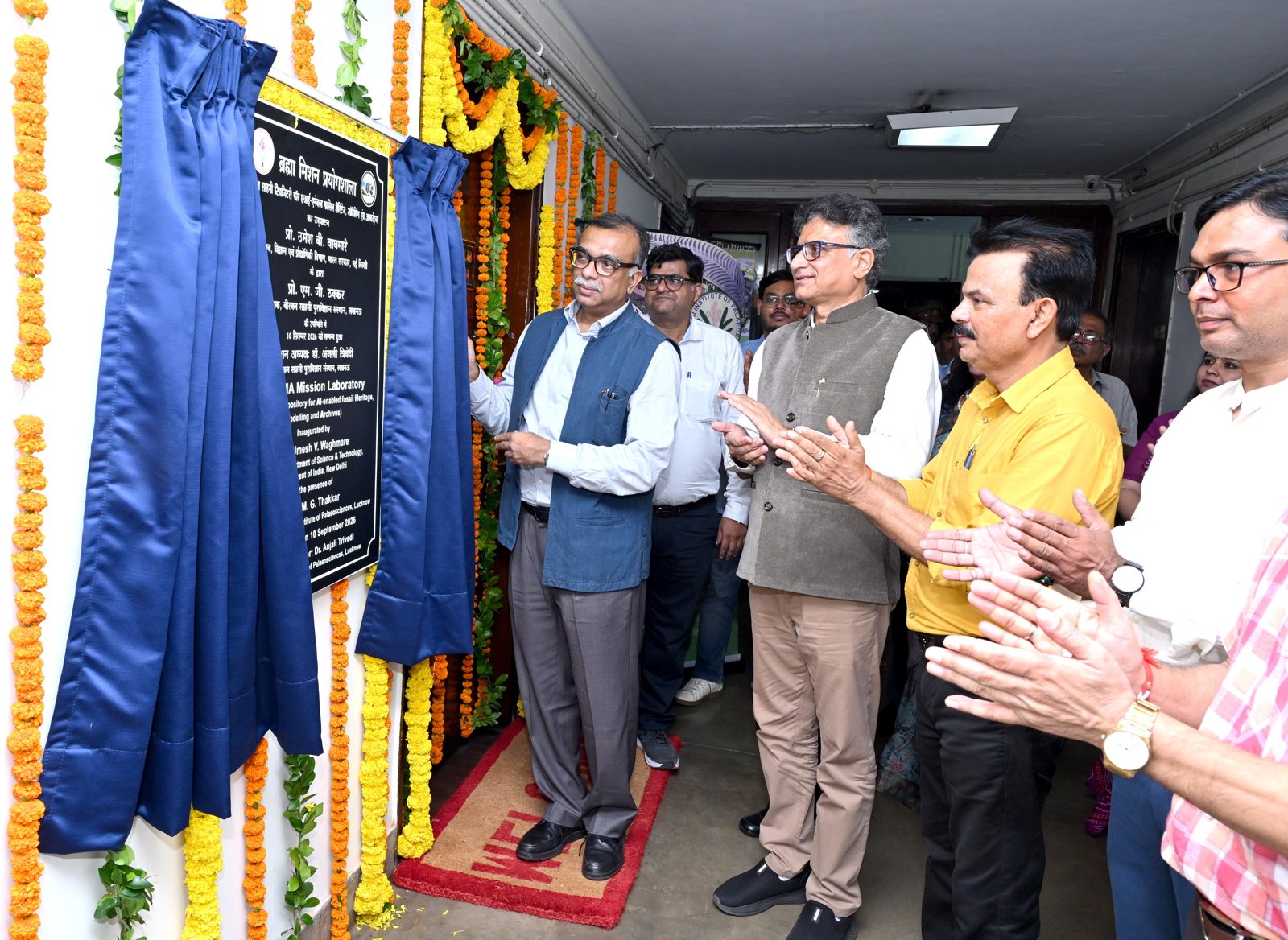
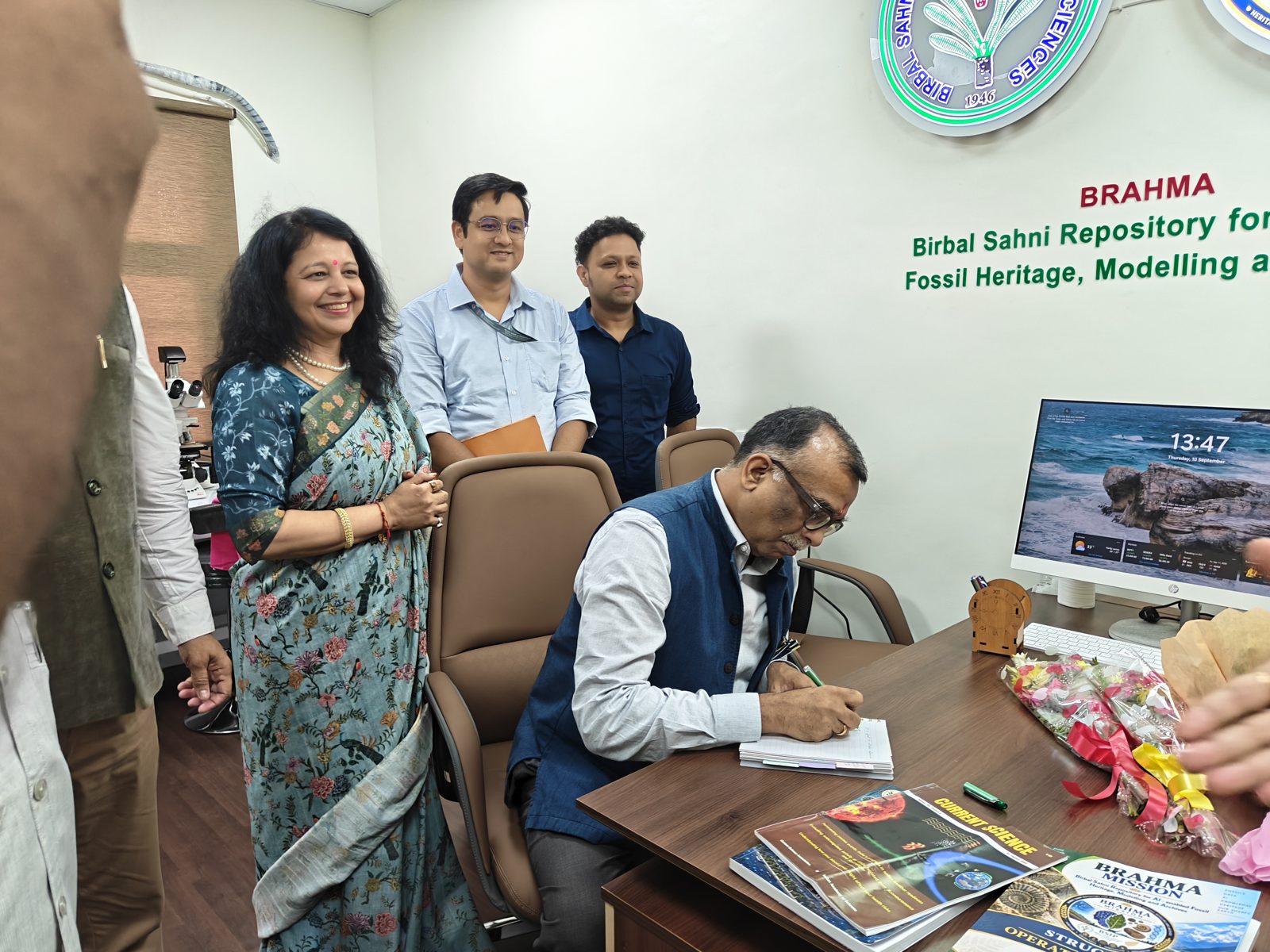
PHASE 2 — BRAHMA Mission Laboratory Inauguration
From Vision and Institutional Framework to a Dedicated AI-Enabled Research Facility
INAUGURATED ON: 10 SEPTEMBER 2026
INAUGURATED BY
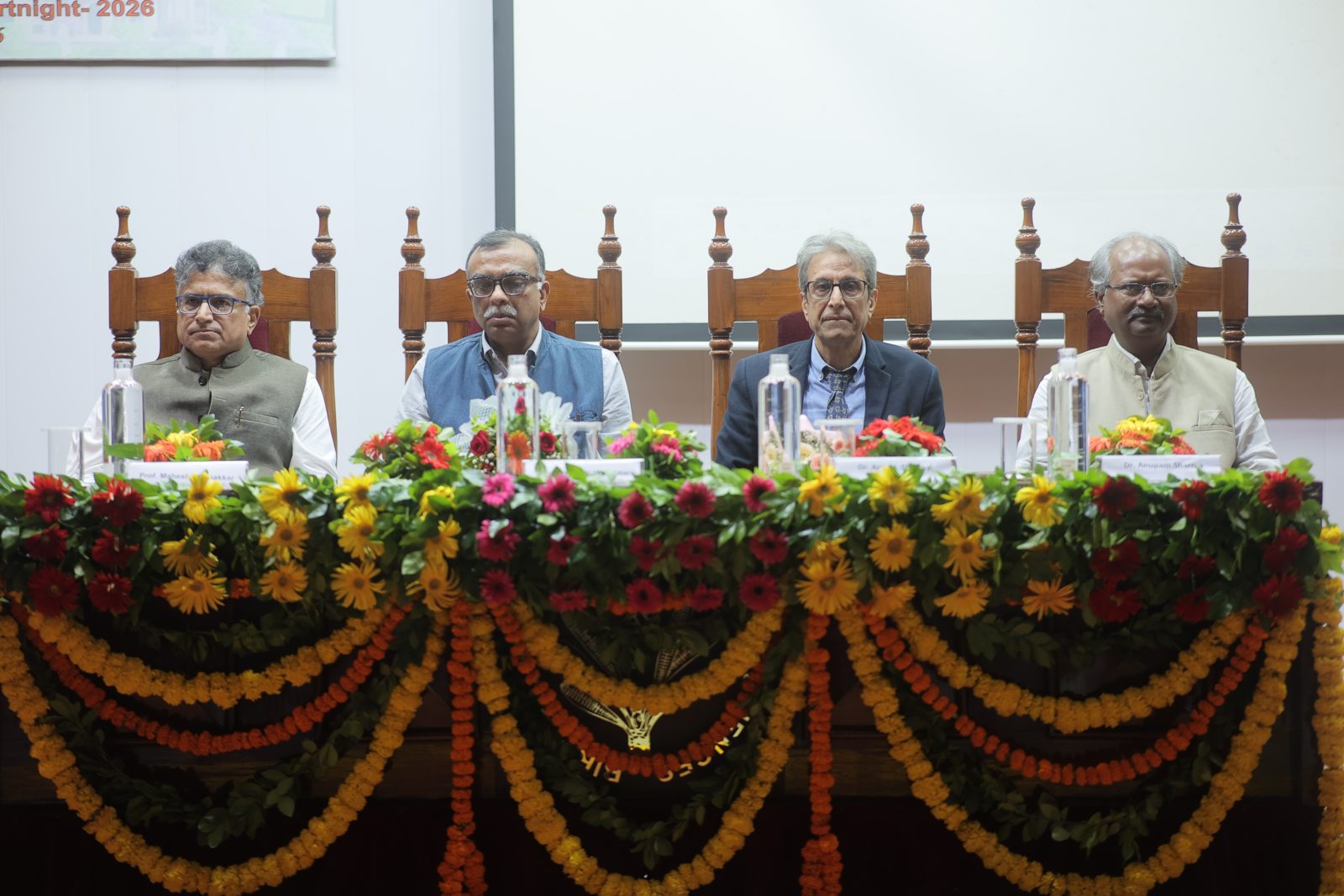
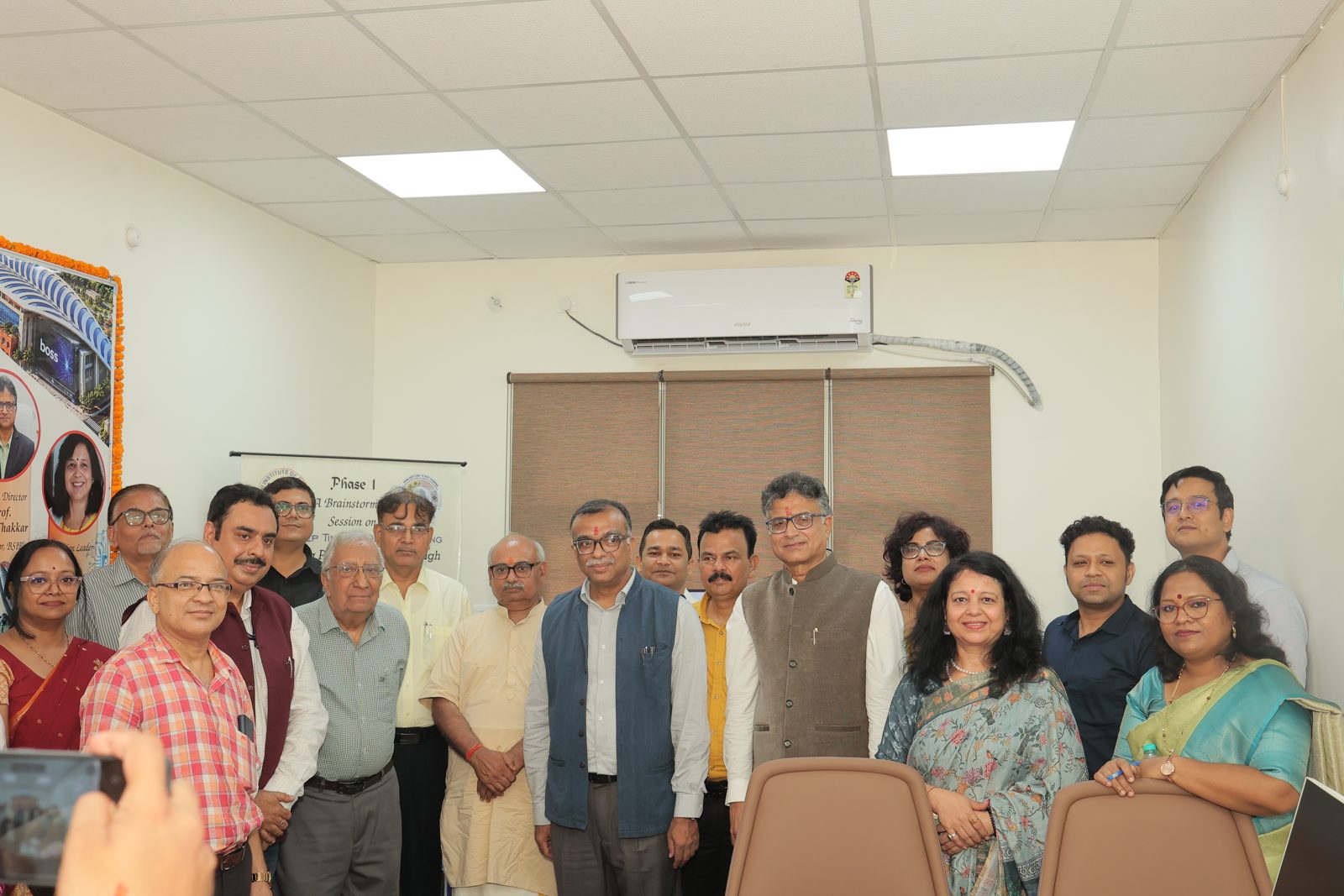
Prof. Umesh V. Waghmare, Secretary, Department of Science and Technology (DST), Government of India, New Delhi
IN THE PRESENCE OF
Prof. Mahesh G. Thakkar, Director, BSIP, Lucknow and Mission Director, BRAHMA Mission
The inauguration marked an important institutional milestone in the development of a next-generation scientific ecosystem integrating palaeoscientific collections with emerging digital and computational technologies.
Perspectives on the BRAHMA Mission
During the inauguration, Prof. Umesh V. Waghmare highlighted the evolving role of BSIP as a multidisciplinary scientific institution addressing contemporary challenges through the integration of emerging technologies and scientific disciplines. The BRAHMA Mission represents this vision by bringing Artificial Intelligence, Machine Learning, digital technologies and computational approaches into palaeoscientific research, opening new possibilities for the study and interpretation of India's rich fossil heritage.
Prof. Mahesh G. Thakkar emphasized the scientific value of fossils and geological archives as records of long-term environmental and climatic changes. He highlighted the potential of Artificial Intelligence and Machine Learning to enhance the study of these archives and contribute to the development of a future-ready palaeoscience research ecosystem.
Dr. Anjali Trivedi (Mission Leader, BRAHMA Mission), emphasised that the BRAHMA Mission is envisioned as a transformative platform for bringing together palaeoscience, Artificial Intelligence, Machine Learning and advanced digital technologies. She highlighted the need to move beyond conventional approaches to fossil and microfossil research by developing digitised, structured and AI-enabled scientific resources from BSIP's rich palaeoscientific collections. She further emphasised that the integration of AI and palaeoscience can enable automated identification and analysis of microfossils, efficient management of large palaeobiological datasets, and improved reconstruction of past environments and climates. Through interdisciplinary collaboration, BRAHMA aims to connect India's valuable fossil heritage with modern computational tools and create a future-ready research ecosystem for palaeosciences.
Phase 2 Photographs